

Scientific Diplomacy Working Group Established at Razi University - دفتر همکاریهای بین الملل


Scientific Diplomacy Working Group Established at Razi University
The first meeting of the Scientific Diplomacy Working Group at Razi University was held with a focus on leveraging border capacities and international cooperation. The aim was to define the group’s policies, formulate operational strategies, and outline a vision for the working group as a bridge connecting academic capacities with cross-border interactions.
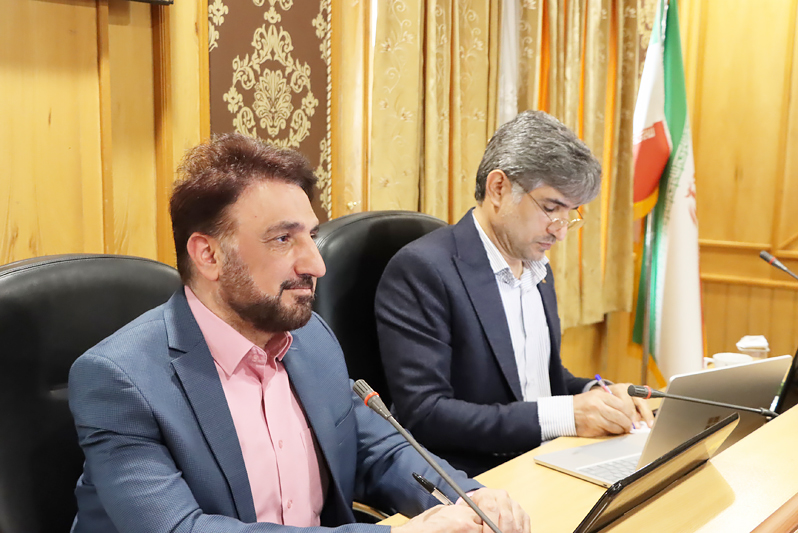
According to the Public Relations Office of Razi University, the first meeting of the Scientific Diplomacy Working Group took place on Tuesday, April 21, 2026 (Ordibehesht 1, 1405), with the participation of the university president, senior managers, and faculty members of the group. The session was also attended by Dr. Abbasali Salighehdar, Head of the Ministry of Foreign Affairs’ Representative Office in Kermanshah. During the meeting, strategies of the working group were presented, emphasizing interaction among the three pillars of “University, Private Sector, and Diplomacy” to achieve a knowledge-based economy and reinforce Kermanshah’s position as a central hub in western Iran.
The meeting, held in the conference hall of the Office of the President at Razi University, was convened with the goal of defining the policies and strategies of the Scientific Diplomacy Working Group.
At the beginning of the session, Dr. Jamal Fathollahi, President of Razi University, offered his condolences on the martyrdom of the Supreme Leader of the Islamic Revolution (may his soul rest in peace), as well as a number of commanders and scientists during the “Ramadan War.” He also expressed his appreciation for the professional and powerful performance of the Ministry of Foreign Affairs, and for the sacrifices made by the armed forces and the Iranian nation.
He emphasized that “the field, diplomacy, and the street” are three complementary elements, stating that these three pillars provide the foundation for international bargaining power and the realization of the principles of dignity and expediency in foreign policy.
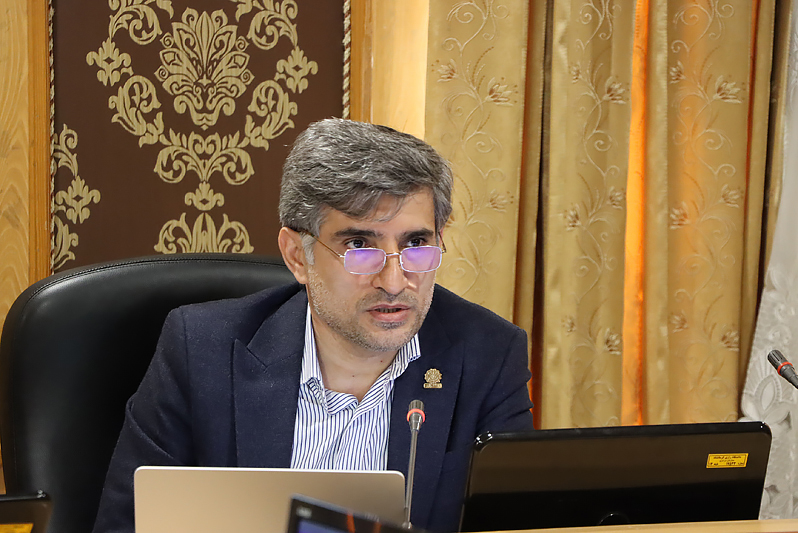
Dr. Fathollahi added that the 12‑Day War and the “Ramadan War” demonstrated how knowledge and technology can play a decisive role both on the ground and in diplomacy. Therefore, any action contributing to the development of a knowledge-based economy and society aligns with the national interests and the overall strategic policies of the country.
The President of Razi University described the Scientific Diplomacy Working Group as an effort to foster interaction among three essential pillars — universities, the private sector (economic actors), and the drivers of diplomacy (the Ministry of Foreign Affairs’ provincial office) — with the goal of generating knowledge to improve decision-making processes at the international level.
Referring to the National Spatial Planning Document and the vision of transforming Kermanshah Province into the center of economic, social, and cultural interactions in western Iran, he presented statistics on the region’s potential. He noted that western Iran, with 7.4% of the country’s area and 9.5% of its population, represents a market worth around 20 billion USD, of which Kermanshah holds about one‑fourth. He emphasized that, according to national master plans, all sectors are obligated to contribute toward realizing this central role.
Dr. Fathollahi further pointed to the region’s significant academic capacity, stating that the higher education community in Kermanshah Province includes 60,000 students and 1,600 faculty members, while across western Iran there are 271,000 students and 6,600 faculty members supporting the region’s economic, social, and cultural capacities.
In conclusion, Dr. Fathollahi highlighted the linking and facilitating role of the members of the Scientific Diplomacy Working Group and the 61 academic departments at Razi University, stressing: “We serve as a connecting and enabling channel to facilitate your interactions with faculty members and to expand our engagement with neighboring countries, particularly Iraq. This working group, utilizing all its capacities, marks the starting point for such collaborations.”
Formation of the Working Group: A Step Toward Bridging Knowledge and Decision‑Making
Following his remarks, Dr. Abbas‑Ali Salighehdar, Head of the Ministry of Foreign Affairs’ Representative Office in Kermanshah, expressed his pride in meeting Razi University’s scholars and elites. He described the establishment of the Scientific Diplomacy Working Group as a strategic and unprecedented initiative, noting that the group’s formation — barely two months after the idea was proposed — demonstrates the university’s strong commitment to operationalizing scientific diplomacy within the province.
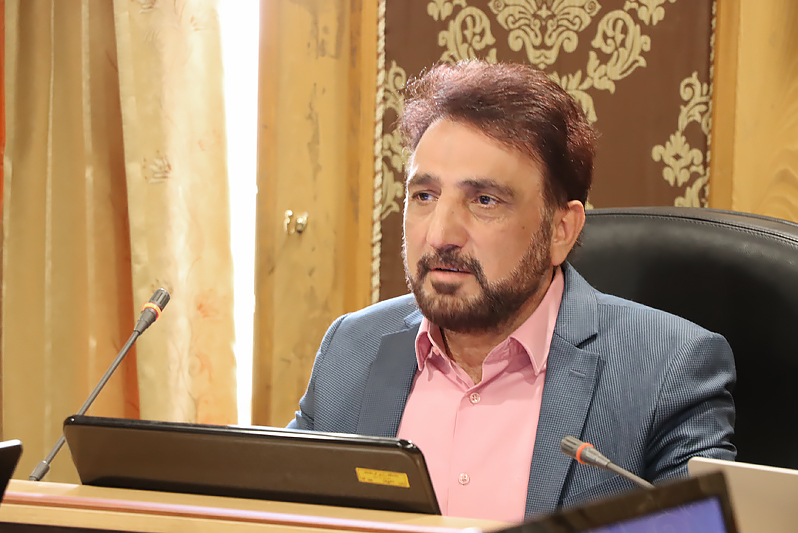
Dr. Salighehdar, referencing the country’s historical experiences in confronting threats, underscored the pivotal role of “knowledge and experience” in crisis management. He added, “If we have a scientific foundation, the path of history becomes smoother for us.” The integration of academic knowledge and practical experience plays an unparalleled role in major decision-making. Today, Islamic diplomacy, as one of the achievements of the Islamic Revolution, relies on the insights of elites.
Working Group Objectives: From Knowledge-Based Decision-Making to National Model-Setting
The Head of the Kermanshah Office of the Ministry of Foreign Affairs identified the most crucial objective of this working group as “designing a decision-making mechanism based on the scientific opinions of professors,” particularly concerning issues relevant to Kermanshah Province. He noted that many issues are not adequately perceived by executive officials. This working group can serve as a successful model for other ministries to also benefit from the ideas of professors. Dr. Salighehdar concluded by emphasizing the necessity of documenting and disseminating the opinions of the working group members.
Emphasizing the Province’s Cultural and Economic Background in Scientific Diplomacy
Dr. Gholamreza Salemian, Director of the President’s Office at Razi University, welcomed the attendees and recited a story from Saadi’s Gulistan, touching upon the history of commercial diplomacy in Iranian culture. He stated that Kermanshah Province, due to its rich cultural heritage, its border with Iraq, its ethnic, linguistic, and religious diversity, and its unique natural attractions, provides a suitable ground for the development of activities in the fields of commerce and scientific diplomacy.
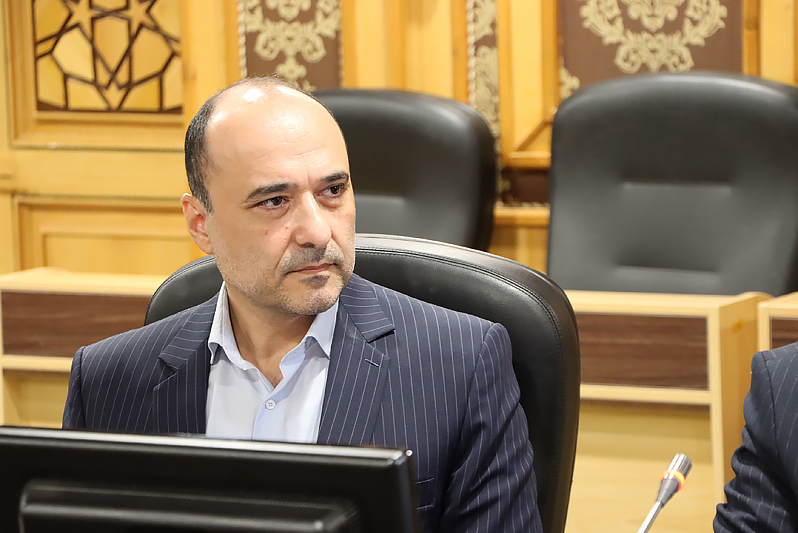
He further added that the Scientific Diplomacy Working Group at Razi University has been formed to leverage these historical and geographical capacities, as well as the scientific potential of the university, to manifest scientific diplomacy in various arenas. The outcomes of this meeting are intended to provide a roadmap for future sessions and ensure the country’s increasing success on the international stage.
Explaining the Reasons for Establishing the Razi University Scientific Diplomacy Working Group and Its Provincial Perspectives
Following this, Dr. Shahab Moradkhani, Director of the International Scientific Cooperation Office at Razi University, while appreciating the presence of officials and faculty members, discussed the motivations behind forming this working group. He stated: “This idea was introduced in the previous meeting of Razi University with the respected head of the Ministry of Foreign Affairs’ Representation Office in Kermanshah Province.” Accordingly, the main strategy of the working group is to utilize the advisory opinions of faculty colleagues across various academic departments of Razi University as intellectual and technical capital.
Dr. Moradkhani, referring to Dr. Salighehdar’s enthusiasm and emphasis on the university’s serious entry into this field, highlighted: “Considering the strategic advantageous proximity of Kermanshah Province to Iraq, the mission of Razi University’s Scientific Diplomacy Working Group is to provide consultations to Dr. Salighehdar and his colleagues at the Ministry of Foreign Affairs and to facilitate leveraging these capacities for international interactions.”
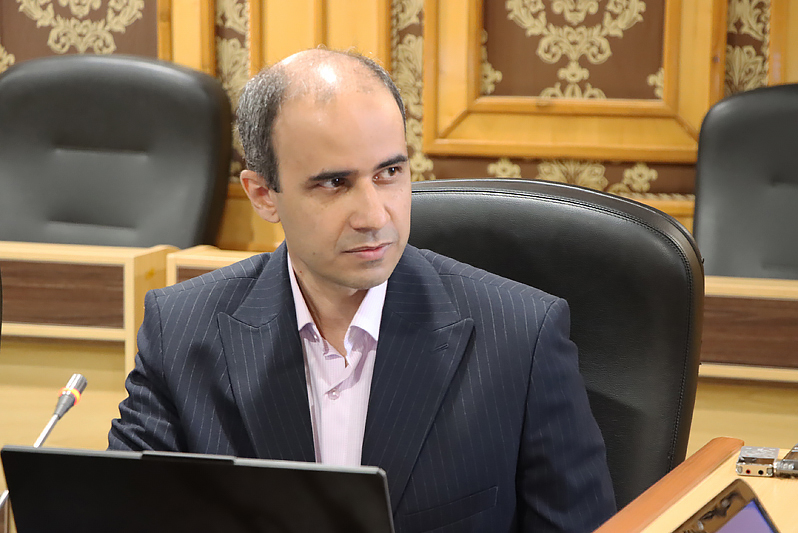
The members present at the Razi University Scientific Diplomacy Working Group meeting expressed their concerns, suggestions, and opinions for advancing scientific and scientific diplomacy collaborations at the provincial level.
At the end of this meeting, emphasis was placed on the necessity of greater coordination among scientific, executive, and international institutions to achieve the outlined objectives. It was decided that the Razi University Scientific Diplomacy Working Group meetings would continue regularly with follow-ups on the approved decisions.
شناسه : 43613966